 |
Umoja Initiative "Uniting for social justice and peace" |
|
||||||
| Home | Lil Inspires Us | Donations | About us | Projects | ||
| “Umoja” is Swahili for “unity” and symbolizes the solidarity required for diverse peoples to achieve social justice, equality, and peace in the face of marginalization and economic exploitation. Canadians can join with these communities to counter the oppressive forces, and can support them by advocating for a foreign policy that promotes economic justice and democracy. | 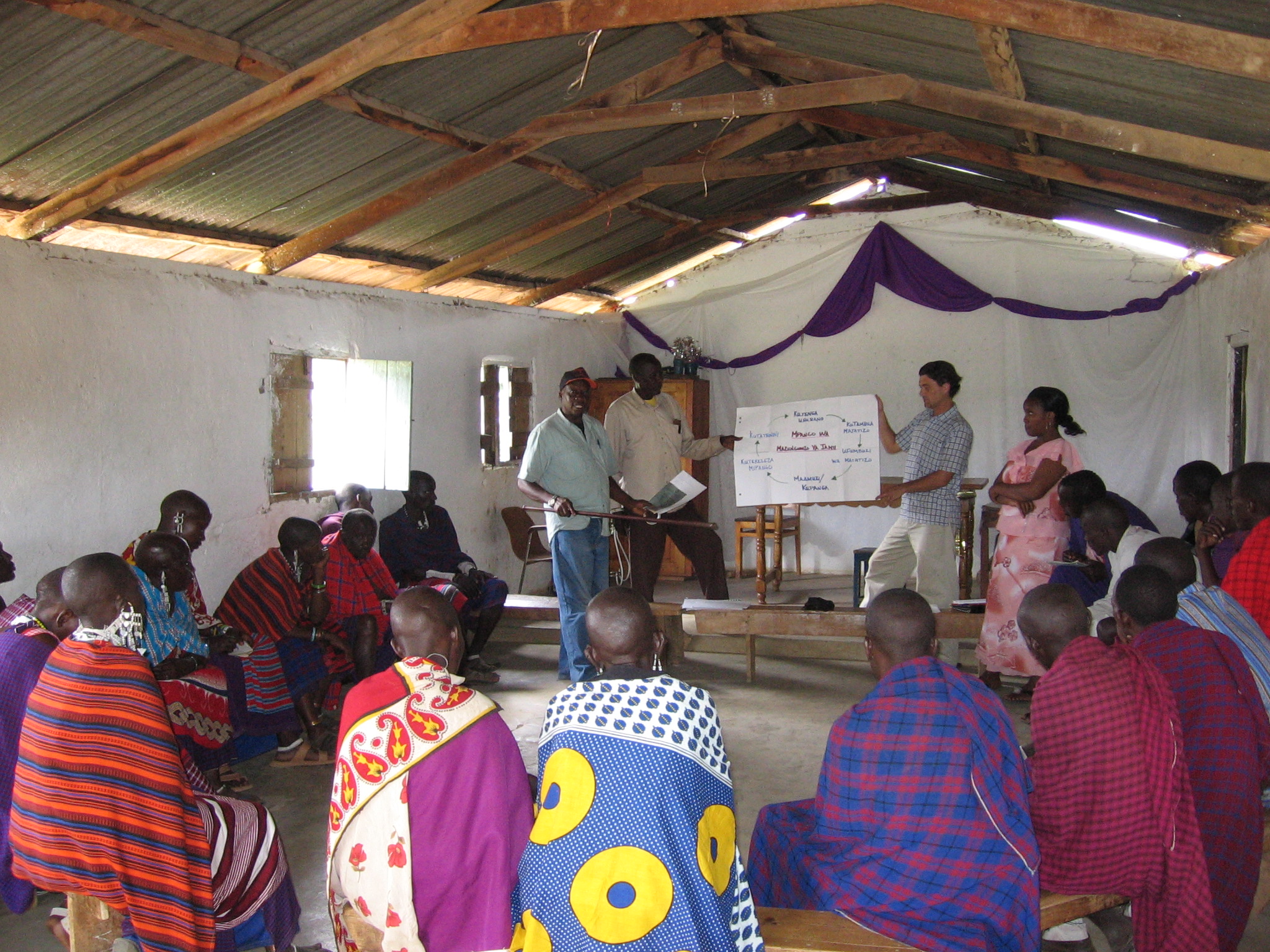 |
| Umoja
Initiatives focus upon larger community development projects
tailored to the needs and capacity of the
recipient community and the expertise of the
development advisors and facilitators. Due to the time
required
to realize sustainable change, most
projects
require a three or more year commitment of up to
$10,000/year. Financial
support comes from groups
(community group, local church, family, business, etc.) sharing
a
commitment to a specific project and community. Sauti
Moja facilitates
mutual
learning and mutual transformation through personal engagement of
donor(s)
and community. Two example of Umoja projects follow: |
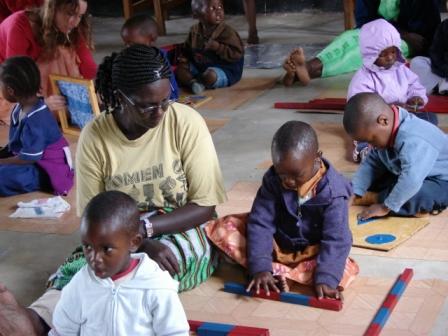 Sara,
a "retired" Maasai teacher, is passionate about setting up
pre-schools in remote villages in order to provide a
better educational and nutritional
start
for Maasai children.
|
Longido
Early Childhood Education (LECHE)
Indigenous children from rural communities are often disadvantaged upon entering the school system, leading to poor performance and early dropout. This perpetuates a cycle of marginalization, as too few Maasai are qualified for positions of power that affect government services, such as health, education and agriculture, to their communities. Recently, Sara Mollelian contacted Sauti Moja, communicating her passion for Maasai children and her commitment to bringing free, early childhood education to remote communities. After the community confirmed its commitment through their on-going contributions to this project, Sauti Moja embraced Sara’s initiative. Nevada Learning Series, a Canadian supplier of educational materials for computer software, has made a long-term commitment to support
LECHE, thereby contributing to healthy early childhood development among
rural children, increased success rates at school, and stronger communities. |
|
| Tanzanian Child Mothers Tanzanian school girls who become pregnant suffer consider
emotional trauma. Though a Maasai child’s
pregnancy does not carry much social stigma, she is likely to be forced into
marriage, which ends any educational aspirations that she may have had. Sauti Moja has initiated a Child Mother
Project in A Canadian donor, who is highly sympathetic to the plight of these child mothers, is committed to raising the funds needed to establish and operate this project for three years. |
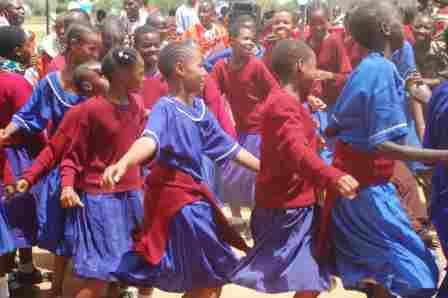 Young Maasai girls who become pregnant need support in order to avoid forced early marriage and
to be able to continue formal education. |